When you have an infant, you think a lot about sleep, mainly about how much you’re not getting.
Over the past four months, I’ve carped endlessly about my lack of sleep—to family, to friends, to colleagues, to dental hygienists, to really anyone who will listen. Sleep is something you don’t miss until it’s gone. To those friends who are expecting their first child, I counsel them (pointlessly, I recognize, because it’s tricky to practice gratitude over something so mundane as sleep) to enjoy it and sleep as much as they can.
Because—soon enough!—a yowling bundle of joy will shatter their unappreciated sleep, and they will spend the intervening time not only yo-yo-ing intense joy and frustration and learning more about humanity and themselves than they’ve ever likely needed to before, but doing all of this while bone-tired and sleep-deprived.
In the course of my now routine Googling about sleep (both mine and our infant’s), I came across a CDC page about “sleep pressure.” (Having noted the use of this term elsewhere, in reference to why you shouldn’t let babies take cat-naps before trying to put them to bed for the night.) Naturally, this page is directed at nurses on shift work, part of a NIOSH (National Institute for Occupational Safety and Health) series on “Training for Nurses on Shift Work and Long Work Hours.” Maybe add “New Parents” into there, too? Kidding!
What caught my eye on this page (besides the intended audience) was this chart, which tracks our bodies’ “homeostatic sleep drive”:
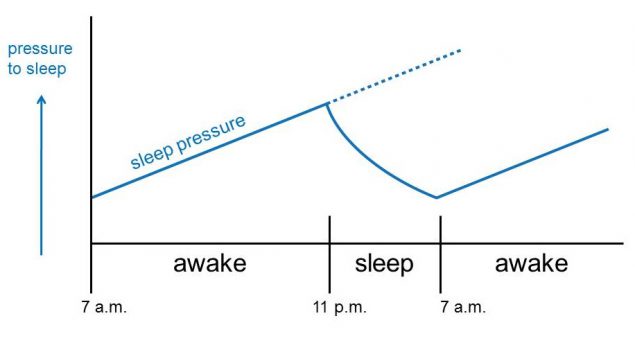
That dotted line for “sleep pressure”? The one that menacingly continues upwards should sleep not occur? Yeah. I know all about that dotted line. The worst part of this look, viewing it as a sleep-deprived new parent, is how that gentle downward curse indicated during “sleep” looks more like a series of steps or—on the worst nights—like the bottom half of a ragged, tooth-filled jaw.

 Taylor Coe